 sarah
sarah Black Canadian culture is a vibrant, multifaceted identity shaped by centuries of African diaspora history, Caribbean and African immigration waves, and the lived experiences of communities across Canada from Halifax to Vancouver. This heritage has profoundly influenced fashion in Canada music, literature, and beauty standards, yet it remains underrepresented in mainstream conversations about Canadian identity.
Understanding Black Canadian culture means recognizing the resilience of early settlers like Mathieu da Costa in the 1600s, the thousands who arrived via the Underground Railroad, and the post-war Caribbean migration that transformed cities like Toronto and Montreal. These historical roots created distinct cultural expressions that differ from both American and British Black experiences.
Today, that rich legacy shows up everywhere in Canadian creative spaces. Black Canadian authors like Lawrence Hill and Esi Edugyan have reshaped our literary landscape. Musicians from Drake to Deborah Cox have redefined sound. And in fashion and beauty, Black-owned Canadian brands are finally getting the recognition they deserve, challenging Eurocentric beauty norms and bringing Afrocentric design, natural hair care innovation, and inclusive sizing to the forefront.
For fashion lovers, exploring Black Canadian culture offers more than trend inspiration. It’s about supporting homegrown Black designers, understanding the cultural significance behind certain styles, and celebrating the communities that have shaped what we wear and how we express ourselves. This isn’t borrowed culture from elsewhere, it’s deeply, authentically Canadian.
The Roots of Black Canadian Culture
Black Canadian culture carries centuries of history that many people don’t realize stretches back to the 1600s, long before Canada became a nation. The earliest Black settlers arrived as free people, enslaved individuals, and Loyalists following the American Revolution. While the Underground Railroad remains the most famous chapter, bringing approximately 30,000 freedom seekers northward between 1850 and 1860, it represents just one thread in a much larger tapestry of Black presence in Canada.
This complex heritage created something distinct from African American culture. Black Canadians developed their own identity shaped by different legal frameworks, regional settlements, and cultural mixing. Communities in Nova Scotia’s Africville, Ontario’s Buxton, and across the Prairies each evolved unique traditions, dialects, and ways of life. Caribbean immigration waves during the mid-1900s added another layer, bringing fresh cultural expressions that merged with existing Black Canadian communities.
What makes this heritage remarkable is how it refused to disappear despite systemic barriers. When official histories overlooked Black contributions, communities preserved their stories through oral tradition, church records, family gatherings, and grassroots cultural organizations. Elders passed down accounts of ancestors who cleared land in harsh climates, built thriving settlements, fought in Canadian wars, and established businesses against overwhelming odds.
Today, this rich past lives on through creative expression. Black Canadian writers document experiences that textbooks ignored. Visual artists reclaim forgotten histories. Musicians blend African rhythms with Canadian sensibilities. Fashion designers weave ancestral patterns into contemporary pieces. Each act of creation becomes both preservation and evolution, ensuring that Black Canadian culture remains vibrant, visible, and impossible to erase from the nation’s story.
Black Voices in Canadian Cultural Literature

Black Canadian authors have carved out essential space in the nation’s literary landscape, documenting stories that mainstream narratives often overlooked or erased. Their work doesn’t just add diversity to Canadian bookshelves, it fundamentally reshapes what Canadian literature means by centering Black experiences, histories, and voices that have always been here. These writers explore identity, belonging, and resilience through poetry, novels, memoirs, and essays that challenge readers to see Canada through a lens where Blackness is central, not marginal.
From Austin Clarke’s unflinching portrayals of Caribbean immigrant life in Toronto to Dionne Brand’s lyrical examinations of diaspora and memory, Black Canadian writers have built a tradition of truth-telling that’s both deeply personal and politically urgent. Their narratives wrestle with what it means to be Black in a country that often positions itself as multicultural yet struggles with anti-Black racism. Through their craft, they’ve created a literary identity that’s distinctly Canadian, rooted in specific geographies like Halifax’s North End, Montreal’s Little Burgundy, or Toronto’s Jane and Finch, while connecting to broader African diasporic traditions.
Notable voices who’ve shaped this literary movement include:
- George Elliott Clarke, poet laureate whose Africadian verse celebrates Black Nova Scotian heritage and history
- Lawrence Hill, author of The Book of Negroes, exploring the Black Loyalist experience and transatlantic migration
- Esi Edugyan, Giller Prize winner whose historical fiction examines Black lives across centuries and continents
- David Chariandy, novelist capturing second-generation immigrant experiences in Canadian suburbs with poetic precision
- Robyn Maynard, scholar and writer documenting anti-Black racism and policing in Canadian society
These authors tackle themes that resonate far beyond their pages: the complexity of belonging to multiple cultures simultaneously, the weight of intergenerational trauma, the joy found in community and cultural celebration despite systemic barriers. They write about natural hair as political statement, code-switching between home and work, the specific sting of Canadian “polite” racism, and the strength drawn from ancestral memory.
Their work matters because it validates Black Canadian existence while educating broader audiences about histories textbooks skip. When a young Black reader sees themselves reflected in Canadian literature, it affirms their place in this country’s story. That’s cultural power, shaping how an entire generation understands identity, justice, and what it means to be Canadian.
Fashion as Cultural Expression
Canadian Black-Owned Fashion Brands to Know
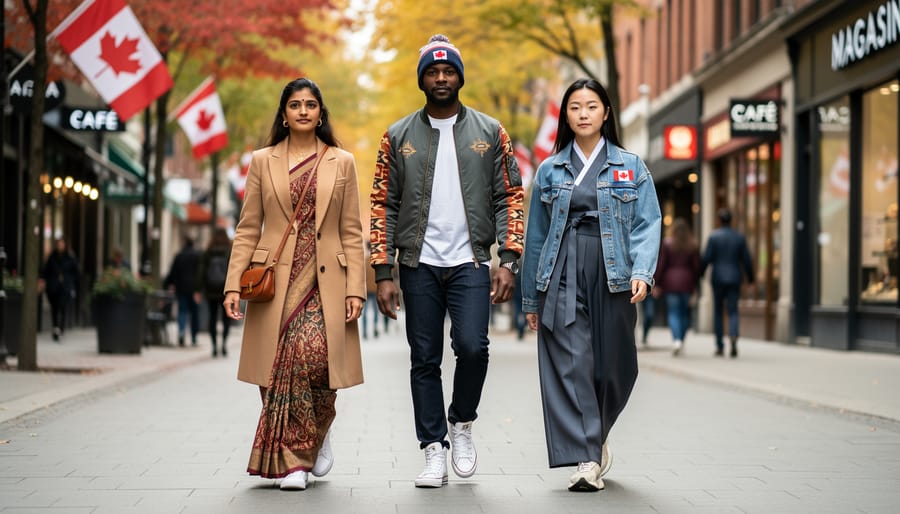
The Canadian fashion landscape is being transformed by Black designers and entrepreneurs who bring fresh perspectives, cultural storytelling, and exceptional craftsmanship to their work. These brands aren’t just creating clothes, they’re building platforms for identity, community, and representation.
Chnge has become a streetwear staple, founded by activist and designer duo Khadesha and Francois. Each piece carries a message of social justice and community empowerment, with profits supporting grassroots organizations. Their hoodies and tees merge bold graphics with purpose-driven fashion, proving style and activism can walk hand in hand.
VAIN brings Toronto luxury to the global stage. Designer Nthabiseng Mosia crafts elegant, minimalist pieces that celebrate Black femininity while incorporating African-inspired silhouettes and textiles. Her collections blur the line between contemporary Canadian design and cultural heritage, creating investment pieces that tell a story.
Fe Noelthough based between Brooklyn and Toronto, represents the Grenadian-Canadian experience through vibrant prints, rich textures, and Caribbean-inspired cuts. Her work has graced runways and red carpets, showcasing how cultural roots can elevate high fashion.
In Vancouver, DiverseCity Clothing champions inclusive streetwear that celebrates multiculturalism and urban Canadian identity. Meanwhile, brands like Saje Clothing and emerging designers on platforms like Black Owned Canada are pushing boundaries in everything from sustainable basics to statement outerwear.
These designers infuse their collections with narratives of resilience, heritage, and pride. Supporting them means investing in fashion that honors Black Canadian creativity while pushing the entire industry toward greater diversity and authenticity.
Beauty Standards and Self-Care Traditions
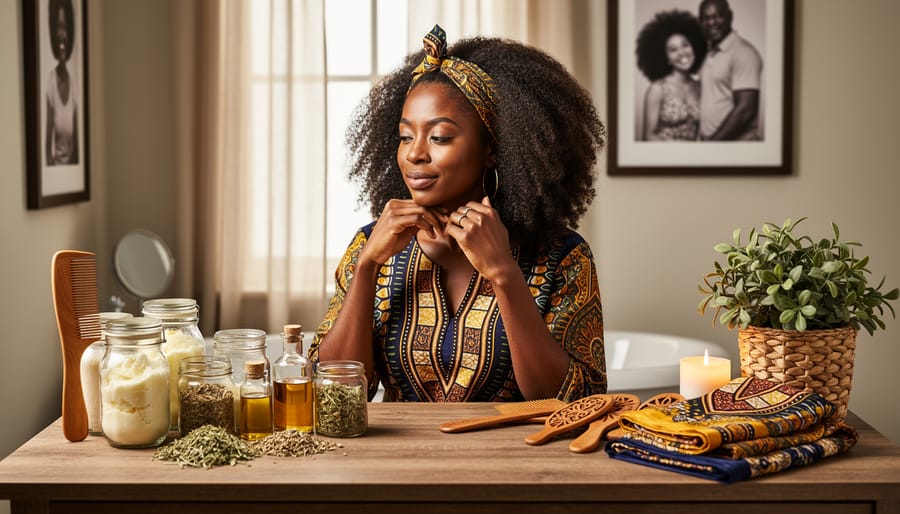
Black Canadian beauty traditions have always been about more than aesthetics, they’re acts of cultural preservation and self-affirmation. For generations, Black Canadian women and men have developed skincare and makeup routines and hair care rituals that honor African and Caribbean heritage while navigating a beauty landscape that hasn’t always reflected their needs. Natural hair care, in particular, carries deep cultural significance. The decision to wear locs, braids, twists, or a natural afro isn’t just a style choice, it’s often a statement of identity and resistance against Eurocentric beauty standards that once deemed these styles unprofessional or unkempt.
Within Canadian beauty communities, there’s a growing celebration of diverse textures, skin tones, and features. Black Canadian creators and influencers are sharing traditional beauty practices passed down through families, from coconut oil treatments and shea butter rituals to protective styling techniques that maintain hair health through harsh Canadian winters. Skincare routines tailored to melanin-rich skin address specific concerns like hyperpigmentation and keloid scarring while celebrating the glow and resilience of darker complexions.
The Canadian beauty industry is slowly catching up, with more brands expanding shade ranges and Black-owned companies gaining visibility in mainstream retail spaces. Yet the most powerful shift is happening in community spaces, online forums, YouTube tutorials, and Instagram pages where Black Canadians share knowledge, recommend products that actually work for their hair and skin, and redefine beauty on their own terms. This isn’t about fitting into existing standards; it’s about expanding what beauty means in Canada to include the full spectrum of Black experiences and aesthetics. Self-care, in this context, becomes an act of cultural pride and community building.
Music, Art, and Lifestyle Influences on Style
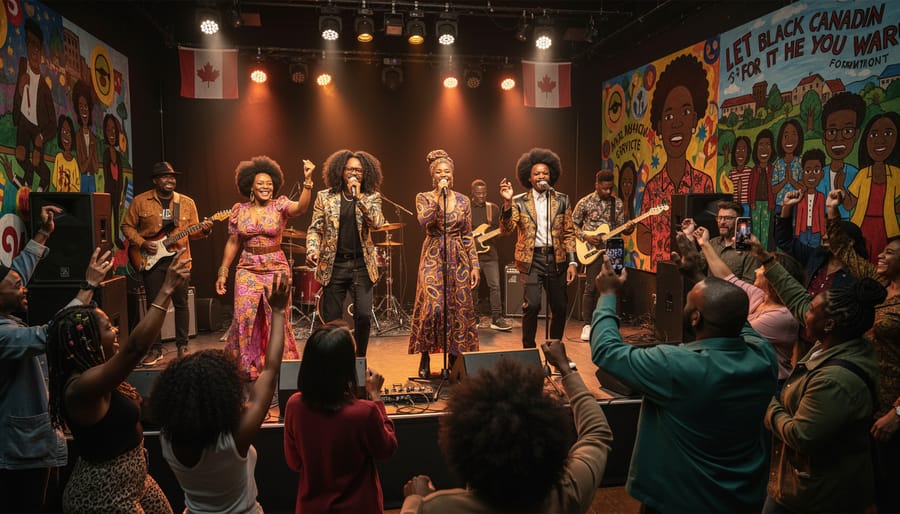
Black Canadian musicians and visual artists don’t just create sound and imagery, they set the tone for what’s trending on the streets. Hip-hop icons like Drake, Tory Lanez, and Toronto’s entire OVO crew have turned athleisure, oversized hoodies, and streetwear staples into a global aesthetic rooted in Toronto’s urban energy. Their influence extends beyond music videos: it’s in the puffer jackets worn during frigid winters, the designer sneakers paired with track pants, and the layered chains that have become signatures of Canadian urban style.
R&B artists bring a different vibe, smooth, polished, and effortlessly cool. The Weeknd’s dark, moody aesthetic has inspired everything from leather bombers to sleek all-black ensembles that blend high fashion with street edge. Meanwhile, Afrobeat’s rise in Canadian cities has introduced vibrant prints, bold colors, and relaxed silhouettes that celebrate African heritage while fitting seamlessly into contemporary wardrobes.
Visual artists like Sandra Brewster and Michèle Pearson Clarke explore Black identity through mixed media and photography, influencing how creatives approach personal style as a form of self-expression and cultural statement. Their work reminds us that fashion isn’t shallow, it’s storytelling through fabric and form.
This creative energy mirrors what’s happening in Vancouver culture and other Canadian hubs, where diverse artistic movements shape local fashion scenes. Youth culture, in particular, blends these influences: graphic tees featuring Black artists, vintage denim styled with Afrocentric accessories, and thrifted pieces reimagined with fresh attitude. Black Canadian creatives prove that music, art, and lifestyle aren’t separate from fashion, they’re the blueprint.
Celebrating Black Canadian Culture Today
Across Canada, year-round celebrations keep Black Canadian culture vibrant and visible. Black History Month in February remains a cornerstone, but the momentum doesn’t stop there, festivals like Caribana in Toronto (now the Scotiabank Caribbean Carnival) and Montreal’s Nuits d’Afrique draw massive crowds celebrating Afro-Caribbean music, dance, food, and fashion. The Halifax African Heritage Month, Afrofest in various cities, and Vancouver’s Hogan’s Alley Festival honor regional Black histories while showcasing contemporary talent. Fashion-forward events like Black Fashion Week Vancouver and Toronto’s Black Designers pop-ups spotlight emerging designers who blend cultural narratives with cutting-edge style.
Literary festivals such as the Word on the Street and dedicated author talks at local bookstores regularly feature Black Canadian writers, creating spaces for dialogue about identity and representation. Community organizations, from the Canadian Black Chamber of Commerce to cultural hubs like Toronto’s Koffler Centre and Calgary’s Akua Benjamin Black Community Resource Centre, host workshops, exhibitions, and networking events that connect creatives, entrepreneurs, and culture enthusiasts.
How can I support Black Canadian culture through fashion and beauty?
Shop from Black-owned Canadian fashion brands and beauty products lines, attend local fashion shows featuring Black designers, and amplify their work on social media. Engage authentically rather than appropriating cultural elements.
Where can I find Black Canadian cultural events near me?
Check your city’s cultural calendar, follow local Black community centers on social media, and look for event listings during Black History Month and summer festival seasons. Many libraries and bookstores also host author readings and cultural discussions year-round.
What’s the difference between appreciation and appropriation in fashion?
Appreciation involves learning the cultural significance behind styles, supporting Black creators directly, and giving credit. Appropriation takes elements without understanding or supporting the community, often for profit or trend-chasing without acknowledgment.
Supporting Black Canadian culture means showing up, not just during designated months, but consistently. Follow Black Canadian designers and creatives on Instagram, buy directly from their brands, share their stories, and bring friends to cultural events. Your participation and purchasing power help sustain these voices and ensure they continue shaping Canada’s creative landscape.
Black Canadian culture isn’t just a chapter in our nation’s story, it’s woven into the very fabric of who we are as Canadians. From the pages of groundbreaking literature to the runways showcasing innovative designers, Black voices have shaped and continue to redefine what it means to be Canadian.
As members of the Stylin’ With Sarah community, we have an incredible opportunity to actively participate in this cultural celebration. Supporting Black-owned Canadian fashion brands isn’t just about making a purchase; it’s about investing in stories, honoring heritage, and amplifying voices that deserve recognition. Whether you’re discovering a new skincare line created by a Black Canadian entrepreneur or adding pieces from emerging designers to your wardrobe, each choice contributes to a more inclusive and vibrant fashion landscape.
Take time to explore the rich tapestry of Black Canadian creativity. Attend cultural events, read works by Black Canadian authors, follow Black creators on social media, and share their work within your networks. These small actions create meaningful impact.
Let’s celebrate the diversity that makes Canadian fashion and culture so dynamic. By recognizing and uplifting Black Canadian contributions, we’re not just staying on trend, we’re building a community that values authenticity, creativity, and cultural appreciation.